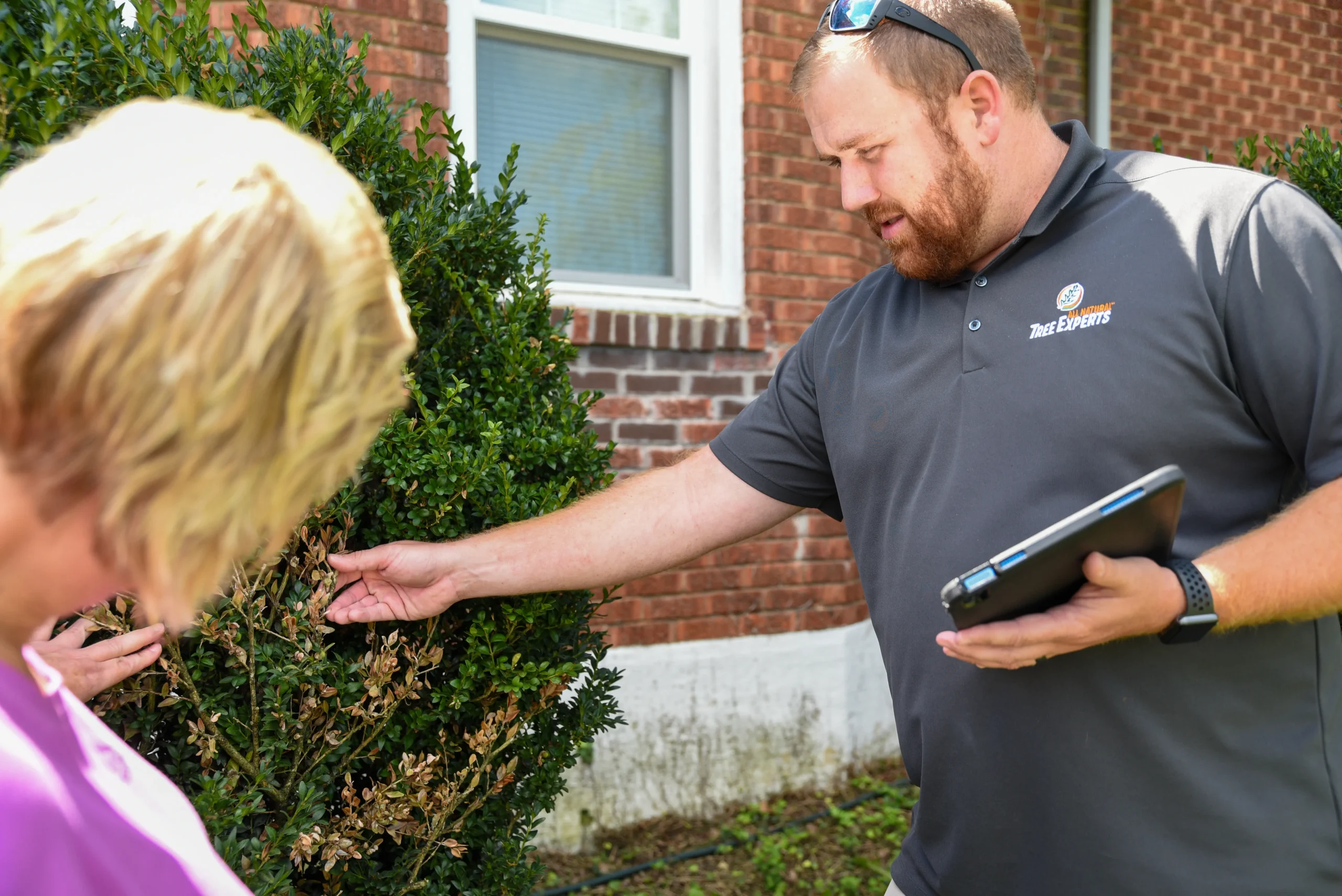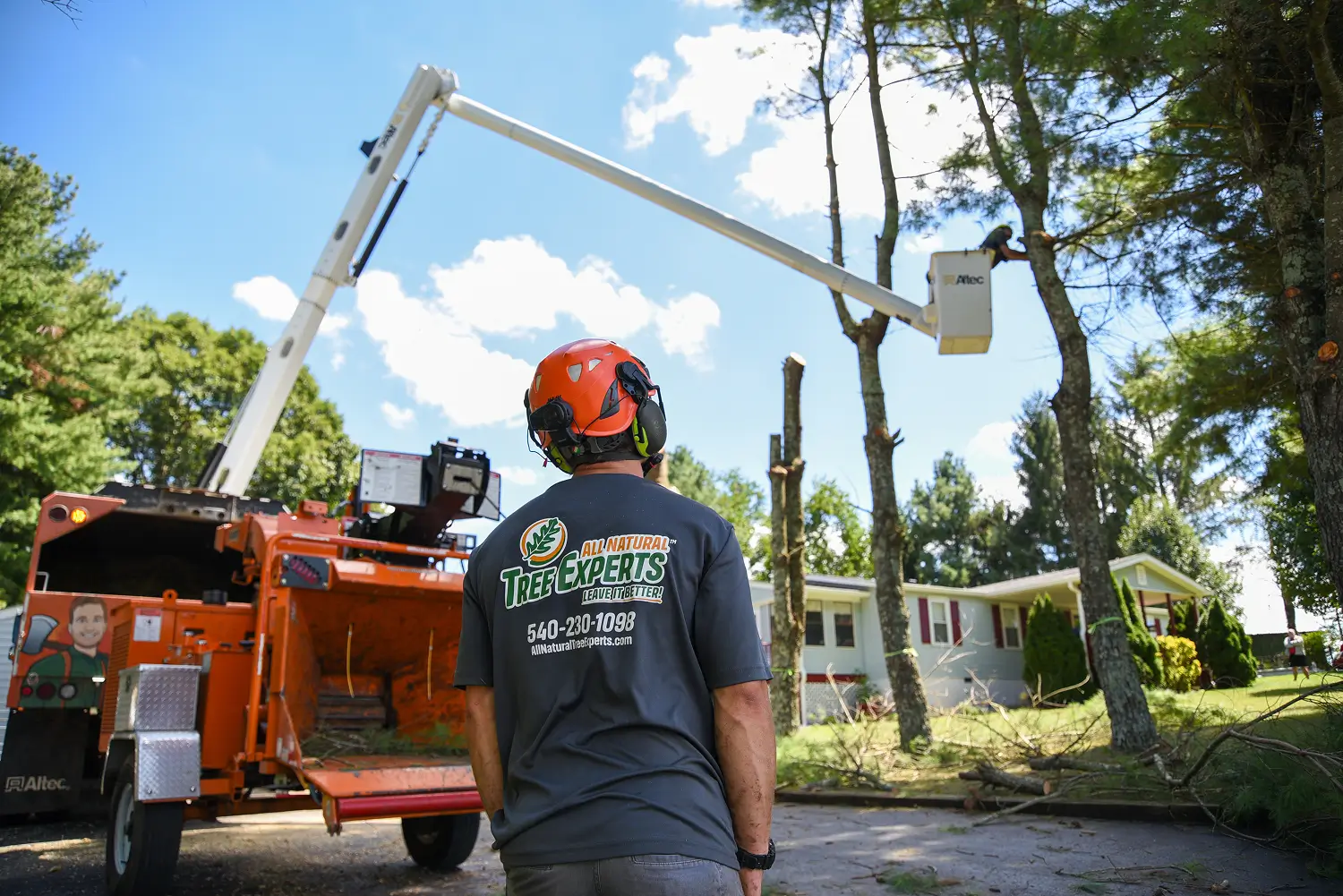
Tree cabling involves installing steel support systems between weak or split branches to reduce structural stress and prevent breakage during storms. At All Natural Tree Experts, we provide Tree Cabling and Bracing Services for trees with codominant stems, storm-damaged limbs, or ice-related weaknesses common in the New River Valley. Our ISA-certified arborists use these systems to help preserve high-value trees and reduce the need for full removal.
Key Takeaways
- Tree cabling and bracing reinforce weak branches and structural defects during severe weather conditions.
- All Natural Tree Experts, located in Christiansburg, Virginia, provides professional cabling services for tree stability.
- Heavy snow, ice, and hurricane-force winds damage trees without proper structural support systems installed.
- Cabling protects trees with aesthetic and intangible values beyond economic purposes for homeowners.
What Is Tree Cabling and Why Consider It?
Tree Cabling & Bracing is a support system that steadies weak or damaged limbs using steel or synthetic cable, installed by trained arborists rather than casual landscapers. Skipping this kind of structural support leaves a compromised tree exposed to complete failure, putting nearby homes, vehicles, and people at direct risk. Christiansburg and New River Valley properties see plenty of shade trees with real sentimental and financial value, which makes early intervention worth the effort.
Tree Bracing Services work alongside cabling but solve a slightly different problem. Bracing adds rigid rods to reinforce split trunks or codominant stems two main trunks growing from a single base that threaten to pull apart under their own weight. Cabling, by contrast, focuses on limb movement.
How does cabling actually protect a tree?
Cable installation lets a weak limb sway together with the rest of the canopy instead of straining against it alone. That shared movement reduces torque at the vulnerable point where the limb meets the trunk, the exact spot most prone to splitting during storms or heavy ice loads. Reducing that stress often prevents a slow crack from turning into a sudden, dangerous break.
Why does a healthy-looking tree still need support?
Shade and curb appeal can mask underlying problems. A tree with pest infestation or hidden decay may look fine one season and drop a major limb the next. Certified Arborist Services from All Natural Tree Experts, based in Christiansburg, Virginia, identify these risks before they escalate into emergency removals. Property owners across the region rely on tree care services that catch structural weaknesses early, preserving mature trees instead of losing them entirely.
How Do You Know a Tree Needs Cabling?
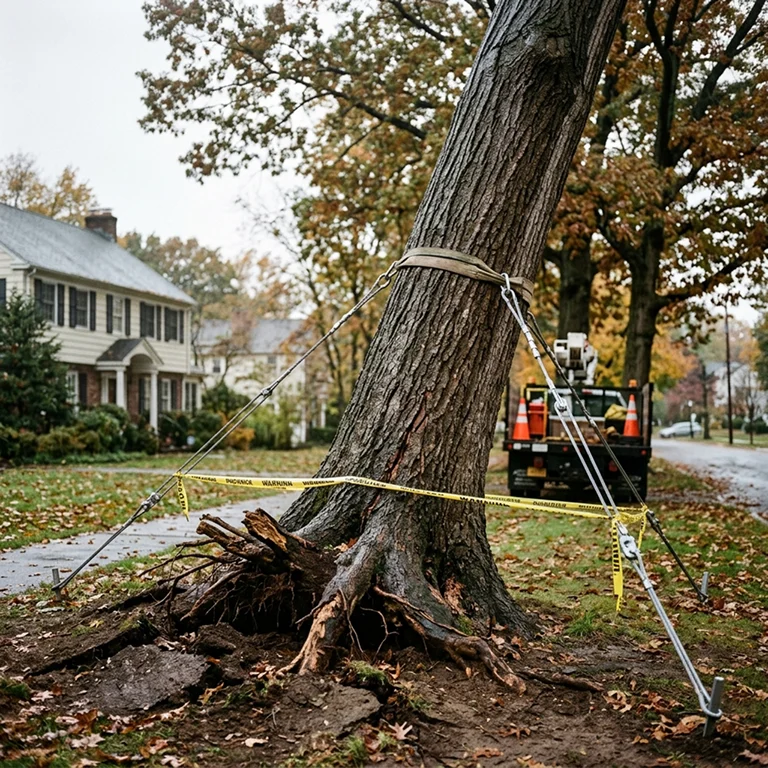
Cracks in the bark and weak branch unions signal that a tree may need structural support. Codominant stems, where two trunks compete for the same space, often split under wind or ice weight without intervention. Property owners in the New River Valley cannot always spot these hazards from the ground, which is why professional evaluation matters before a limb fails onto a driveway or roof.
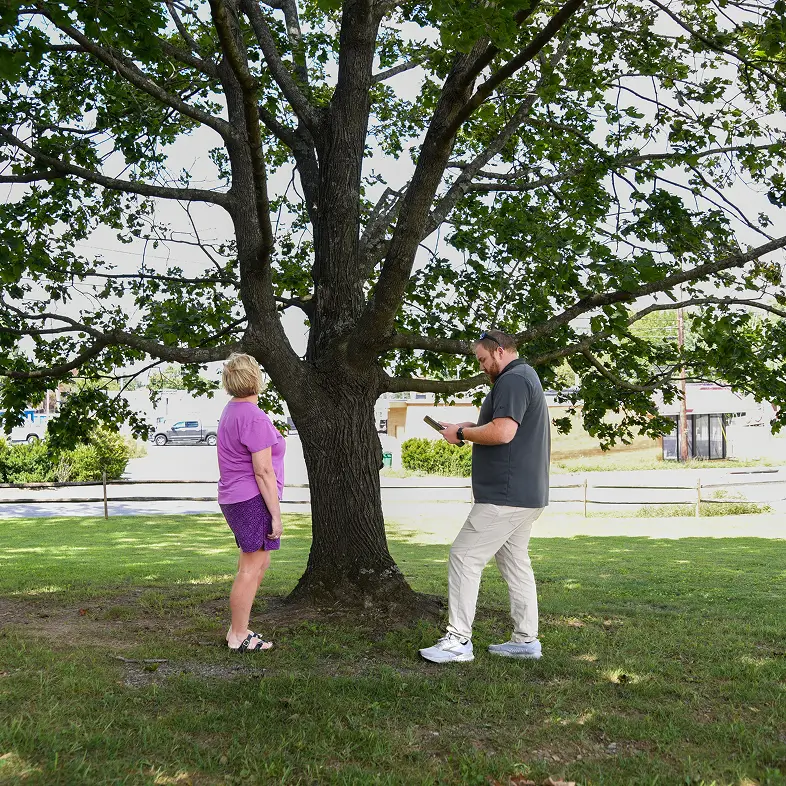
Certified arborist services start with a full inspection, not a guess. Trained specialists assess a tree from its root zone up through the canopy, checking for internal damage that never shows up in the leaves or bark color. A tree can look perfectly healthy from the curb while hiding hollow wood or a weakened core underneath.
What signs suggest a tree is structurally unsound?
Bark cracks, split unions, and lean are the most visible red flags. Trees with multiple trunks growing from a single base carry extra risk, since the attachment point rarely strengthens with age. A certified inspection catches these issues early, often before storm season puts real stress on the structure.
Why does early detection matter so much?
Catching a weak union early can help preserve a struggling tree, potentially avoiding removal. Delayed detection raises the odds of costly damage to a home, driveway, or roof from a falling limb.
Common indicators that warrant a cabling and bracing evaluation include:
- Visible cracks or splits in the bark
- Codominant stems sharing a narrow attachment point
- A noticeable lean that has worsened over time
- Canopy density that seems disproportionate to trunk strength
Routine tree care services, paired with periodic risk assessments, give property managers a clear picture of which trees need reinforcement now versus later.
What Happens During Professional Cabling and Bracing?
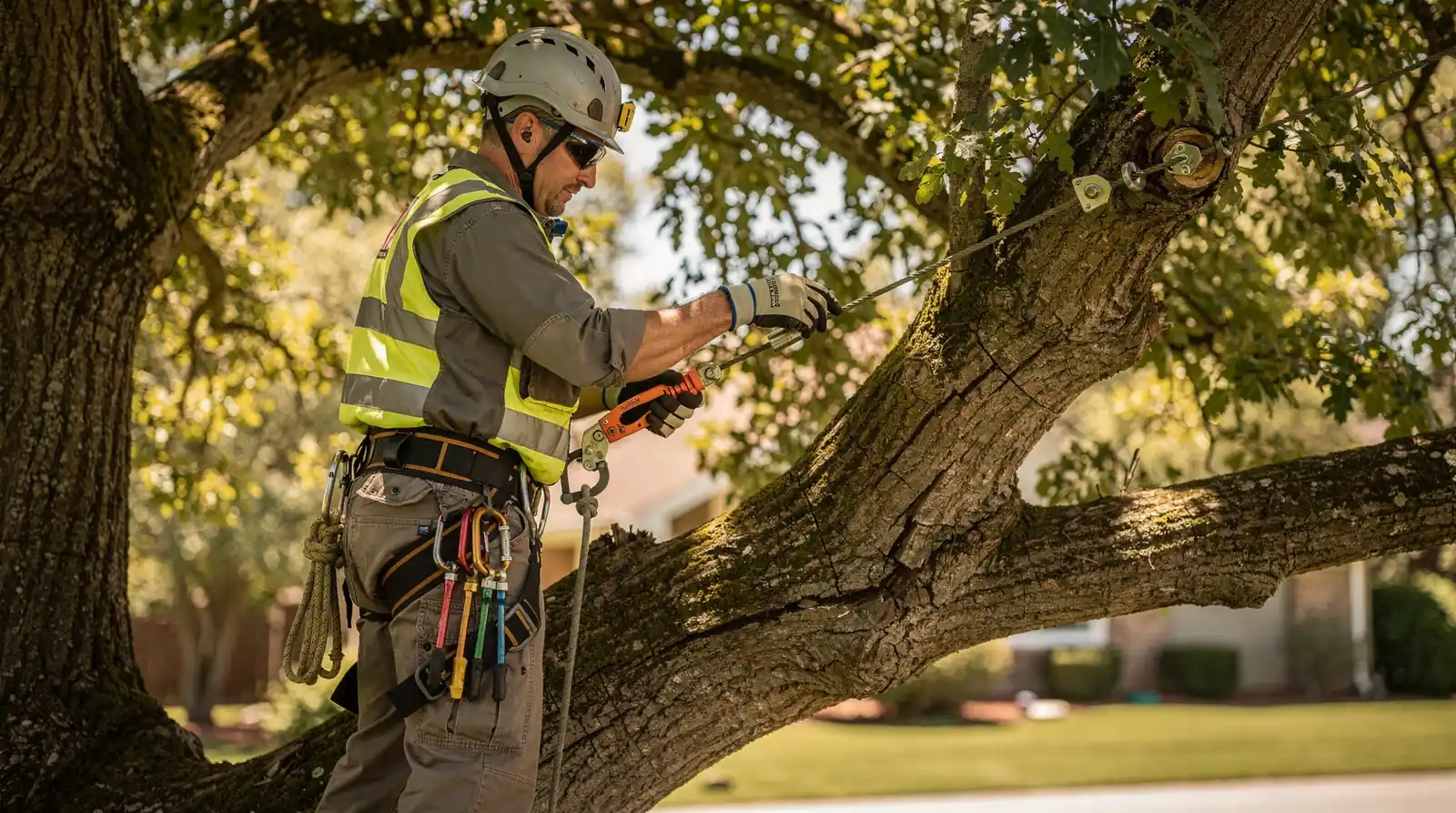
Professional cabling and bracing follows a set sequence: inspection, diagnosis, hardware installation, and follow-up monitoring. Skipping any step raises the risk of a costly failure during the next windstorm. Property owners in Christiansburg who understand this process make better decisions about which trees deserve support versus removal.
Certified arborist services begin every job with an honest, on-site assessment rather than a sales pitch. ISA-certified arborists examine the tree’s structure and history before recommending cabling or bracing for that specific specimen. This targeted evaluation matters because not every crack or lean requires hardware some conditions call for pruning or continued monitoring instead.
How does an arborist decide between cabling and removal?
Removal makes sense when decay compromises the trunk’s core strength. But tree cabling and bracing often preserves older, high-value trees that would look unbalanced or awkward after heavy corrective pruning. Cabling supports the structurally weak section while keeping the tree’s natural form intact, which matters for shade trees and specimen trees homeowners want to keep for decades.
What does the installation process involve?
- Inspect the canopy for codominant stems, cracked bark, and included bark unions.
- Diagnose storm risk, since weak, injured, or pest-infested trees break far more easily once harsh winds or ice loads arrive.
- Select hardware placement, positioning cables or braces at points that reduce stress on the weak attachment.
- Install and secure the system using techniques suited to the tree’s species and defect.
- Schedule follow-up inspections to confirm the hardware still performs as conditions change.
A staffed crew of 20 employees supports coordinated scheduling, so installation and later checkups happen without long delays. Once cracks, hollow spots, or a pronounced lean appear, contacting a professional tree care services provider promptly limits further structural damage.
How Is Cabling Different From Bracing?
Cabling installs flexible steel or synthetic support high in a tree’s canopy to limit movement between weak limbs. Bracing inserts rigid rods lower in the trunk or major forks to hold split or included unions together. Both methods trace back to a shift in forestry thinking. Arborists once viewed a decayed or leaning tree as a candidate for removal. Over time, professionals recognized that such a tree could hold real value for a landscape instead of getting cut down.
That recognition led to the development of tree Cabling & Bracing as an alternative to removal. Foresters sought ways to preserve structurally compromised trees while reducing the hazards property owners faced from falling limbs or split trunks. The distinction between the two techniques matters for property owners weighing options in the New River Valley:
| Method | Placement | Primary Function |
|---|---|---|
| Cabling | Upper canopy, between major limbs | Restricts excessive limb movement |
| Bracing | Trunk or lower crotch, at split unions | Holds structural union together |
Which One Does a Given Tree Need?
The answer depends on where the weakness sits. A tree with codominant stems splitting near the base typically needs bracing. A tree with a heavy limb prone to swaying in wind benefits from cabling. Tree Cabling Services and Tree Bracing Services often get paired on the same tree when multiple defects exist.
Structural support work never stands alone. It fits within a broader, science-based program that includes inspection, pruning, trimming, fertilization, and removal when preservation is no longer realistic. Certified Arborist Services evaluate each tree individually. Soil nutrient loss, pest activity, and spreading fungal infection all threaten stability from the inside out. A tree can look sound from the yard and still be hollow at the core, which is why ongoing tree care services matter more than a single inspection.
What Mistakes Should You Avoid With Cabling?
Four errors turn a sound cabling plan into wasted money or, worse, a hazard left standing in the yard. Skipping routine inspection tops the list. Delaying tree Cabling & Bracing work raises the odds a weakened tree drops limbs in a storm or falls victim to fungal disease before a property manager even notices the warning signs.
Treating every species the same ranks close behind. Oaks, maples, and pines each carry different structural weak points, and soil conditions across the New River Valley speed up decay at different rates depending on the tree. A cabling plan built for one species rarely fits another.
Is a generic cabling job good enough?
No. Generic Tree Cabling Services without a tree-specific assessment risk two outcomes: unnecessary removal of a tree that could have been saved, or support hardware that’s too weak for the actual load. Certified Arborist Services evaluate each tree individually before recommending cables, braces, or removal.
Does neglecting structure really affect home value?
Yes. Buyers consistently favor properties with well-maintained landscapes, even at a higher asking price. A tree that splits during a windstorm. One lost to disease from years of neglect, erases that curb-appeal advantage fast.
Property owners avoid these mistakes by treating cabling as one part of ongoing tree care services, not a one-time fix:
- Schedule inspections on a regular basis, not only after storm damage appears.
- Request an assessment specific to the tree species and site conditions.
- Confirm the provider offers honest recommendations, including when removal is unnecessary.
- Reassess cabled or braced trees periodically as they grow and shift weight.
Tree cabling represents a critical intervention for preserving structurally compromised trees and protecting your landscape from potential hazard. By addressing weak branch unions and split trunks before failure occurs, cabling extends tree longevity while maintaining safety on your property. Our certified arborists assess each situation individually to determine whether cabling serves your trees’ long-term health objectives. Proactive tree care through cabling demonstrates a commitment to sustainable landscape management and environmental stewardship.
FAQ
What is the difference between tree cabling and tree bracing?
Cabling uses steel or synthetic cable installed high in the canopy to limit excessive movement between weak or heavy limbs, reducing stress at the point where a limb meets the trunk. Bracing uses rigid rods installed lower in the trunk or at major forks to hold split or codominant stems together. The two methods are often paired on the same tree when multiple structural defects exist.
How do I know if my tree needs cabling or bracing?
Warning signs include visible cracks or splits in the bark, codominant stems sharing a narrow attachment point, a lean that has worsened over time, and a canopy that seems too dense or heavy for the trunk’s apparent strength. A certified arborist inspection is the only reliable way to confirm whether a tree needs structural support, since many defects are not visible from the ground.
Does cabling or bracing harm the tree?
No. Installed correctly by a trained arborist, cabling and bracing hardware is designed to work with the tree’s natural growth rather than against it, allowing the canopy to sway together instead of straining a single weak point. The goal is to preserve the tree’s natural form while reducing the risk of limb failure.
Is cabling a one-time fix, or does it require follow-up?
Cabling and bracing hardware should be checked periodically as the tree grows and shifts weight. All Natural Tree Experts schedules follow-up inspections after installation to confirm the system still performs as conditions change, and recommends reassessing supported trees on a regular basis rather than waiting for storm damage to appear.
When does a tree need removal instead of cabling?
Removal becomes the better option when decay has compromised the trunk’s core strength, since no amount of cabling or bracing can restore lost structural integrity. Certified Arborist Services evaluate each tree individually, and All Natural Tree Experts recommends cabling only when it can genuinely preserve the tree’s long-term health and safety.
Conclusion
Tree cabling and bracing give property owners in Christiansburg and the New River Valley a proven way to protect structurally weak trees without resorting to removal. Codominant stems, storm-damaged limbs, and hidden decay all raise the risk of sudden limb failure, but a professional inspection and the right hardware cabling for canopy movement, bracing for split unions can extend a tree’s life while keeping it safe. All Natural Tree Experts brings ISA-certified evaluation and installation to every job, assessing each tree individually rather than applying a one-size-fits-all fix. Scheduling regular inspections and addressing warning signs early remains the most reliable way to preserve a landscape’s mature trees and avoid costly, unnecessary removals.
Schedule Your Free Consultation
📞 Call us: (540) 634-6572
✉️ Email: sales@allnaturaltreeexperts.com
Our Locations
📍 Christiansburg
114 Pepper St SE Suite A, Christiansburg, VA 24073
📍 Roanoke
3154 Brandon Ave SW, Roanoke, VA 24018
📍 Charlottesville
310 Avon St #2, Charlottesville, VA 22902