When a tree is removed from your property, the job is not always finished when the trunk and branches are gone. The remaining tree stump can continue to take up valuable yard space, interfere with landscaping, create a tripping hazard, and become an obstacle for future planting or construction.
That leaves many homeowners with an important question: Should you choose stump grinding or complete stump removal?
Although the terms are sometimes used interchangeably, stump grinding and stump removal are two different processes. The right option depends on your property’s layout, your landscaping plans, the tree species, the condition of the stump, and how completely you need the underground root system addressed.
In this guide, we’ll explain the difference between stump grinding vs. stump removal, the advantages and disadvantages of each option, when one method may be more appropriate than the other, and what homeowners should consider before hiring a professional tree service.
What Is Stump Grinding?
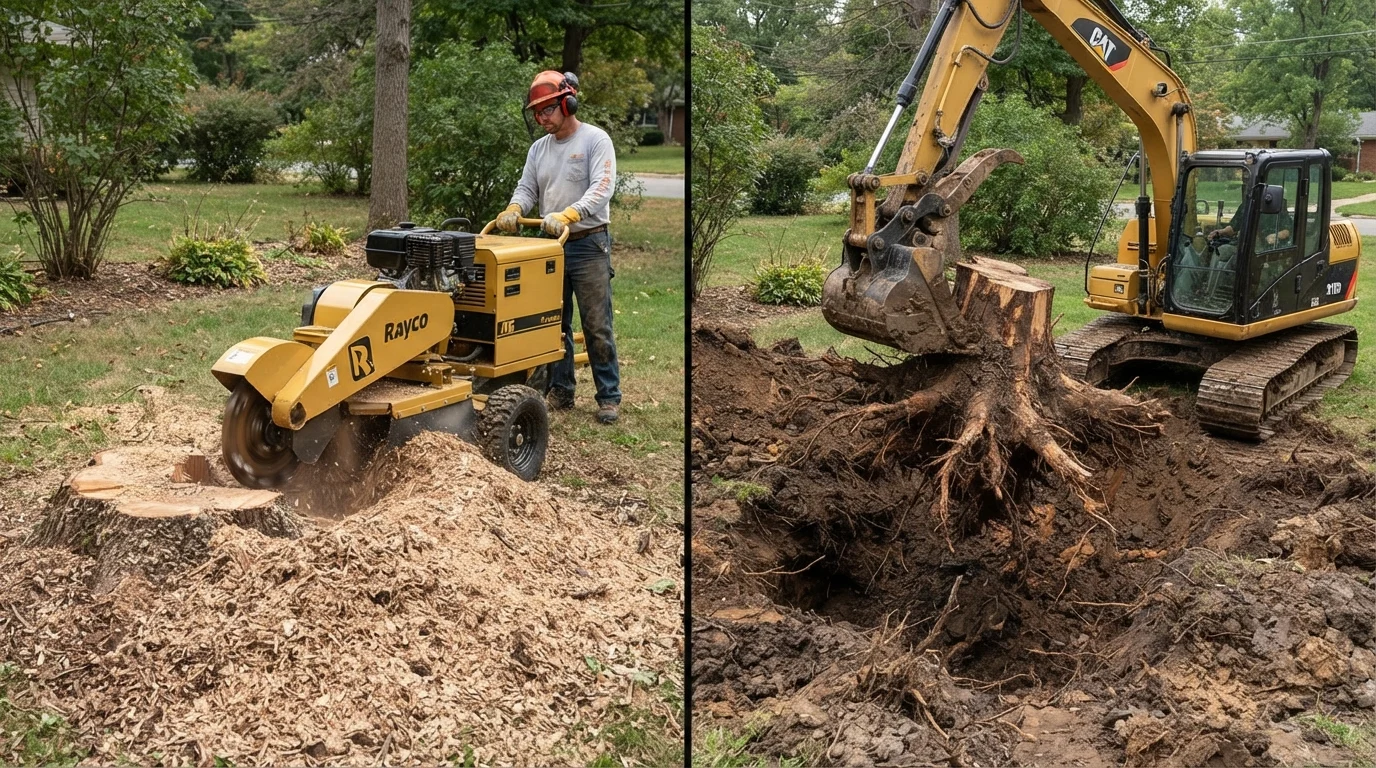
Stump grinding is the process of mechanically reducing a tree stump below the surrounding soil level using specialized stump-grinding equipment.
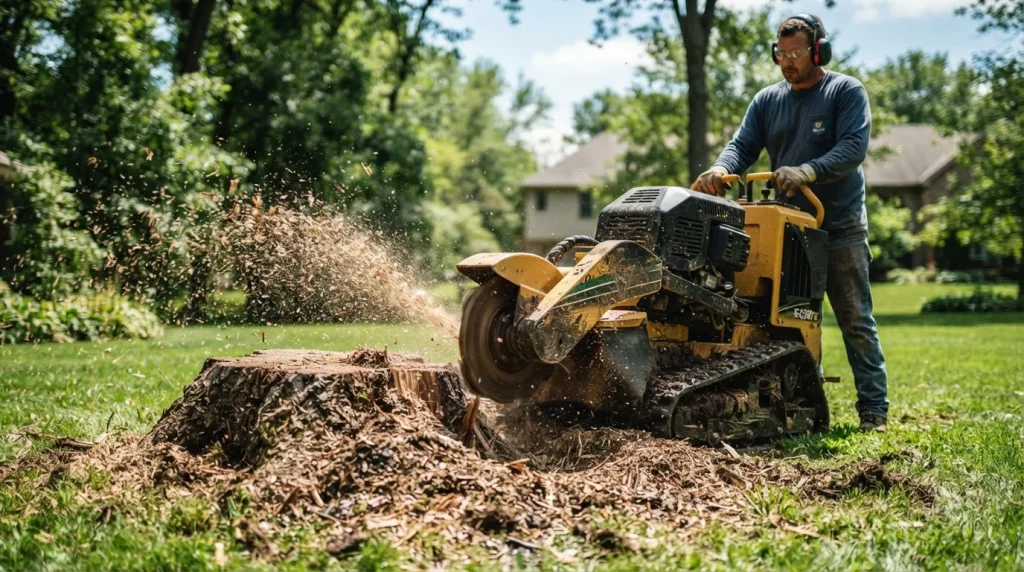
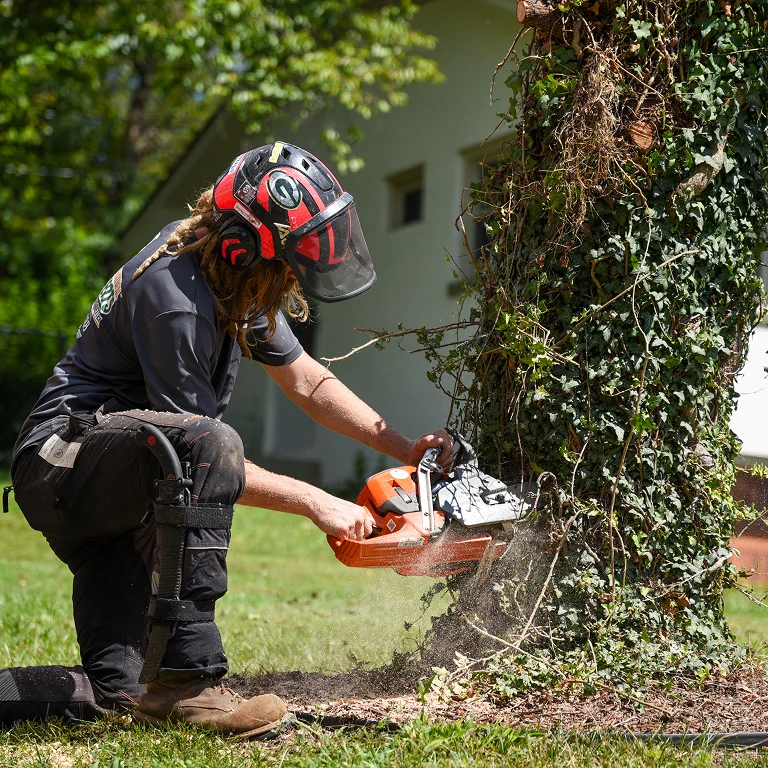
A professional stump grinder uses a cutting wheel equipped with hardened teeth to break the remaining wood into small pieces or wood chips. The operator gradually works across the stump until the visible portion has been ground down below grade.
The exact grinding depth can depend on the equipment, location, tree species, and intended use of the area afterward.
Once the stump has been ground, the resulting cavity can typically be filled with appropriate soil or other material, allowing the area to be incorporated into the surrounding landscape.
How Does Stump Grinding Work?
A typical professional stump grinding process may include:
-
Inspecting the stump and surrounding area
The technician evaluates the stump’s size, location, accessibility, and nearby structures or landscaping. -
Preparing the work area
The surrounding area is checked for potential hazards, obstacles, underground concerns, and anything that could interfere with the equipment. -
Positioning the stump grinder
Specialized equipment is brought as close to the stump as practical. -
Grinding the stump
The cutting wheel gradually reduces the stump into wood chips. -
Grinding below grade
The stump is generally taken below the surface to create usable space for landscaping. -
Cleaning the work area
Excess wood chips and debris can be removed or managed according to the project requirements.
All Natural Tree Experts explains that its stump grinding service is designed to clear unwanted stumps, eliminate trip hazards, and prepare areas for landscaping or planting.
What Is Stump Removal?
Stump removal is a more extensive process in which the stump and a significant portion of its associated root structure are physically extracted from the ground.
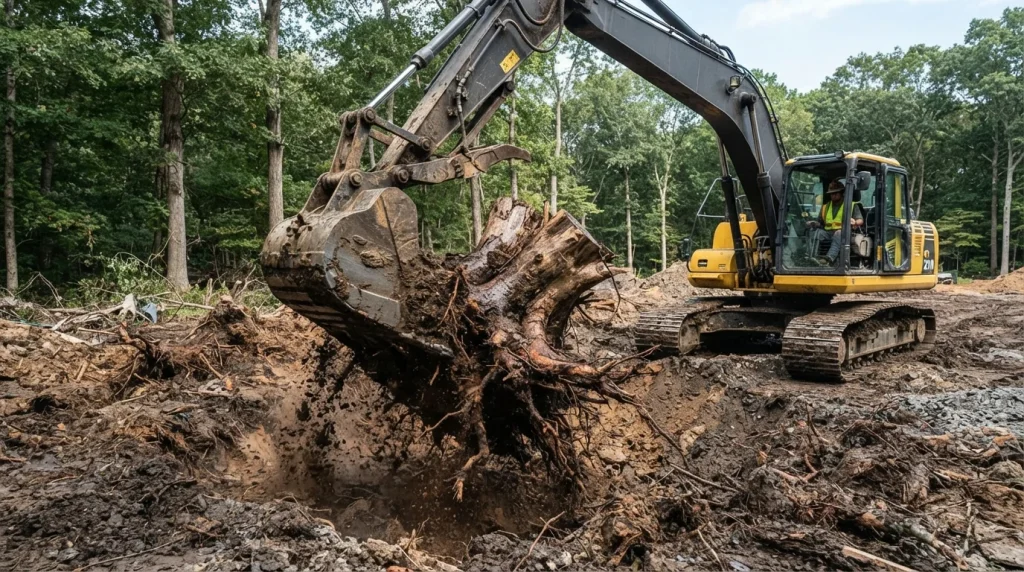
Rather than simply grinding the visible stump below grade, complete stump removal focuses on physically taking the remaining stump out of the soil.
Depending on the stump’s size, location, and root structure, this can require digging, cutting roots, specialized machinery, or a combination of techniques.
Because a tree’s roots can extend well beyond the original stump, removing every root from the surrounding soil may not always be practical or necessary. The scope of “stump removal” should therefore be clearly defined with your tree service provider before work begins.
Stump Grinding vs. Stump Removal: What’s the Difference?
The primary difference is what happens to the stump and the surrounding root system.
With stump grinding, the visible stump is mechanically ground down below the surface while portions of the root system remain underground.
With complete stump removal, the objective is to physically extract the stump and address more of the remaining root mass.
Here’s a simple comparison:
| Feature | Stump Grinding | Stump Removal |
|---|---|---|
| Visible stump | Ground below grade | Physically extracted |
| Root system | Most major roots remain underground | More of the root system is removed |
| Amount of excavation | Usually limited | Usually more extensive |
| Ground disturbance | Generally lower | Generally higher |
| Landscaping afterward | Yes | Yes |
| Best for reclaiming lawn space | Often suitable | Suitable |
| Best for construction in the exact location | Depends on project | Often more appropriate |
| Potential for remaining roots | Yes | Reduced, but complete root eradication may still depend on the situation |
| Project complexity | Generally simpler | Generally more involved |
The most important point is that stump grinding is not the same thing as removing every part of the tree’s root system.
Benefits of Stump Grinding
For many residential properties, stump grinding provides an efficient way to deal with an unwanted stump without extensively disturbing the surrounding landscape.
1. It Improves Your Yard’s Appearance
An old tree stump can make an otherwise well-maintained yard look unfinished.
Grinding the stump below ground level can create a cleaner appearance and make it easier to incorporate the area into your existing landscape design.
2. It Removes a Common Trip Hazard
Stumps can be difficult to see, particularly when they’re covered by grass, leaves, or other vegetation.
A stump located in a walkway, play area, or frequently used section of the yard can create an avoidable tripping hazard.
3. It Creates More Usable Yard Space
Once a stump has been ground down, the area can potentially be used for:
- Grass
- Mulch
- Flower beds
- Landscaping
- New planting
- Outdoor living areas
- Other yard improvements
4. It Usually Requires Less Excavation
Because stump grinding focuses on reducing the stump rather than excavating the entire root ball, it generally causes less disruption to the surrounding soil and landscape.
This can be particularly useful when a stump is located near established landscaping, fences, patios, or other property features.
5. It Can Be a Practical Solution for Multiple Stumps
If you’re clearing a property with several old tree stumps, grinding can provide an efficient way to reclaim the surface area without excavating every stump and its associated root structure.
Disadvantages of Stump Grinding
Stump grinding is not the ideal solution for every situation.
Remaining Roots
One of the biggest considerations is that substantial portions of the root system remain underground.
Over time, these roots naturally decay. However, depending on the tree species and circumstances, some trees can produce shoots from remaining roots or other underground structures. Extension guidance notes that certain woody plants can resprout from stumps or spread through lateral roots.
It May Not Be Appropriate for Certain Construction Projects
If you’re planning to build directly where the stump and its root system are located, simply grinding the stump may not provide the type of site preparation the project requires.
Construction, foundations, hardscaping, utility work, or major excavation may require a more extensive approach.
Wood Chips Are Produced
Grinding produces a significant amount of wood material. Those chips can sometimes be useful as mulch, but the resulting area may still need to be graded and filled before it is ready for a new lawn or landscape feature.
Benefits of Complete Stump Removal
There are situations where physically removing the stump makes more sense.
1. You Need the Area for Construction
If you’re planning to install a structure, foundation, driveway, retaining wall, patio, or another major feature where the stump is located, your contractor may need the underground obstruction addressed rather than simply grinding the stump.
2. You’re Planning Extensive Excavation
Projects that require digging in the exact location of the stump may benefit from removing more of the remaining root mass.
3. You Want to Address Regrowth Concerns
Some tree species are capable of producing new shoots from remaining plant material or roots. In those circumstances, your arborist may recommend a more extensive removal strategy.
4. You Need a Clear Planting Location
If you want to plant another tree in exactly the same location, the remaining roots from the previous tree can potentially interfere with preparation and establishment.
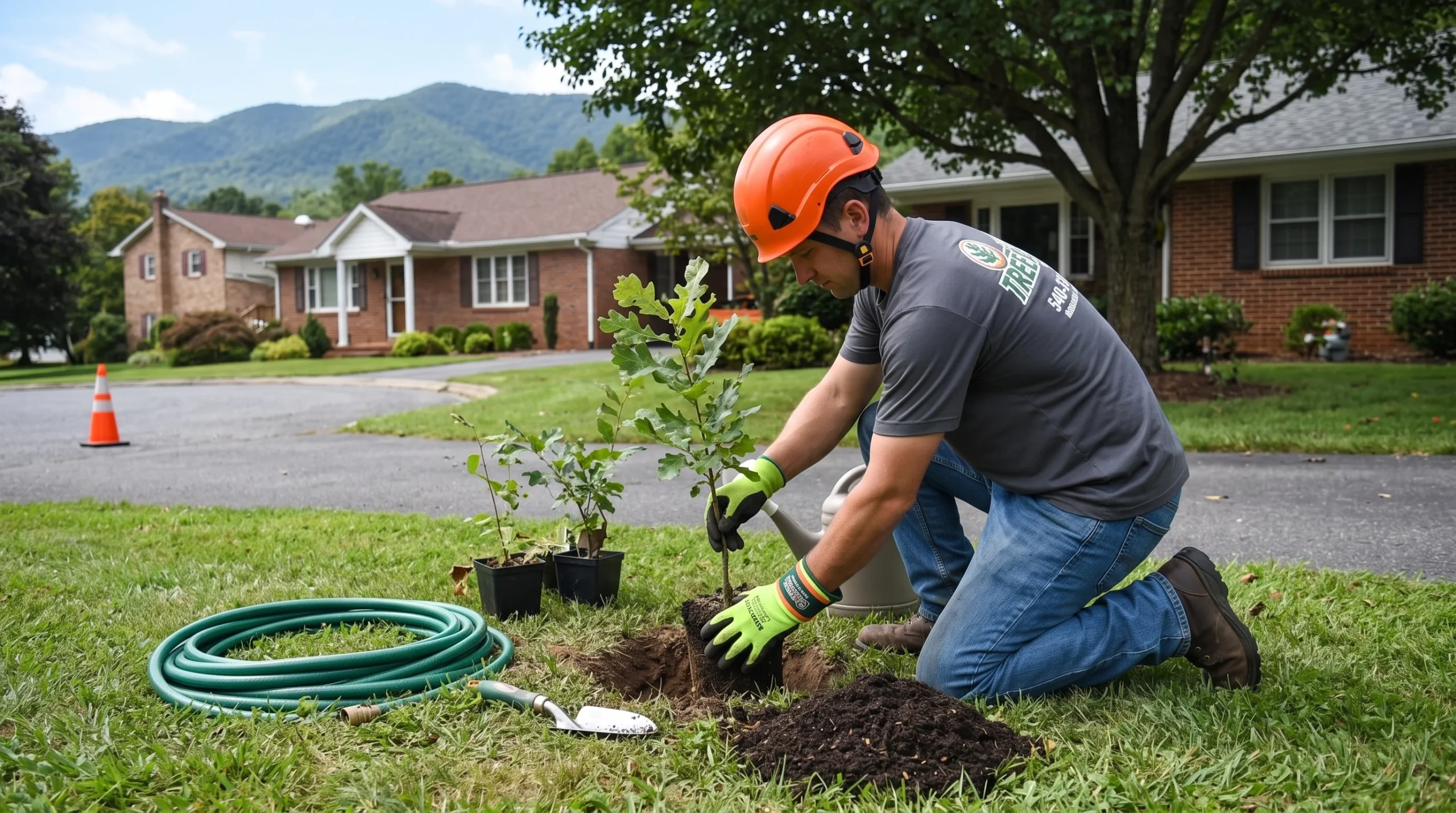
All Natural Tree Experts notes that it offers stump removal for new planting and describes the service as removing the stump and enough of the root system to create an unobstructed space for new planting.
Disadvantages of Stump Removal
Complete stump removal also has trade-offs.
More Soil Disturbance
Removing a stump and its roots generally requires more digging and excavation than grinding.
This can disturb nearby grass, soil, plants, and landscaping.
More Labor and Equipment
Because the process is more extensive, complete stump removal can require additional labor and specialized equipment.
It Can Be More Difficult in Confined Spaces
A stump located next to a house, fence, retaining wall, driveway, utility area, or mature landscaping can be challenging to physically excavate.
A professional assessment is particularly important in these situations.
Which Is Better: Stump Grinding or Stump Removal?
There isn’t one universally correct answer.
The best choice depends on what you want to do with the property after the stump is gone.
Choose Stump Grinding When:
Stump grinding may be appropriate when:
- You primarily want the visible stump gone.
- You want to reclaim lawn space.
- You’re planning to plant grass or landscape over the area.
- You want to minimize excavation.
- The stump is not located in an area requiring major construction.
- You want to improve the appearance and usability of your yard.
- You have multiple stumps that need to be cleared efficiently.
Consider Complete Stump Removal When:
More extensive stump removal may be appropriate when:
- You’re planning construction over the location.
- You need significant excavation in the stump’s location.
- You’re installing a foundation or major hardscape.
- You plan to replant in the exact same location and need more root material addressed.
- The tree species or site conditions create a concern about regrowth.
- Your project specifically requires the stump and substantial root structure to be physically removed.
Does Stump Grinding Stop a Tree From Growing Back?
This is a common question from homeowners.
The answer depends partly on the tree species and the extent of grinding.
Grinding removes the above-ground stump and can take it well below the soil surface, but it does not necessarily remove every root. Some tree species can regenerate from remaining roots or underground plant structures.
For that reason, if you’re dealing with a species known for vigorous suckering or sprouting, discuss the possibility of regrowth with an experienced arborist before deciding between grinding and removal.
All Natural Tree Experts specifically addresses this concern and notes that some species can be more persistent, while complete stump removal can be considered when eliminating remaining stump/root material is important.
Can You Plant a New Tree After Stump Grinding?
Yes, but the answer depends on the location, tree species, condition of the previous tree, and your planting plan.
If you want to plant a new tree in approximately the same area, the remaining roots and old wood can affect soil preparation and available growing space.
It’s also worth considering why the previous tree was removed.
If the previous tree had a disease or serious root problem, planting another susceptible tree in the same location may not be advisable.
Before planting, consider:
- The previous tree’s species
- Why it was removed
- The condition of the remaining soil
- The amount of remaining root material
- The new tree’s mature size
- Available sunlight
- Drainage
- Distance from structures and utilities
An arborist can help determine whether the location is appropriate for another tree.
How Long Does Stump Grinding Take?
The time required for professional stump grinding varies depending on the size and condition of the stump and the accessibility of the property.
Factors that can affect the project include:
- Stump diameter
- Number of stumps
- Wood hardness
- Root flare
- Accessibility
- Location near structures
- Required grinding depth
- Site conditions
- Cleanup requirements
A small, accessible stump can be considerably quicker to grind than a large stump located behind a fence or surrounded by landscaping.
For this reason, an accurate quote should be based on the actual property and stump rather than a generic price.
How Much Does Stump Grinding Cost?
The cost of stump grinding varies from property to property.
Some of the factors that can affect pricing include stump size, accessibility, depth, number of stumps, wood condition, and cleanup requirements.
All Natural Tree Experts notes that stump size, accessibility, desired grinding depth, and debris removal can all influence the final cost. The company recommends an assessment of the specific stump before providing pricing.
Be cautious about choosing a tree service solely because it advertises an unusually low price.
A professional estimate should make it clear what is included, such as:
- The previous tree’s species
- Why it was removed
- The condition of the remaining soil
- The amount of remaining root material
- The new tree’s mature size
- Available sunlight
- Drainage
- Distance from structures and utilities
- Grinding depth
- Number of stumps
- Wood-chip handling
- Cleanup
- Access requirements
- Additional excavation, if needed
- Disposal or hauling
A written estimate can help prevent misunderstandings about the scope of work.
Is DIY Stump Grinding a Good Idea?
You may find stump grinders available for rent, but operating this type of equipment is not a simple landscaping task.
Stump grinders contain powerful cutting mechanisms and can throw wood chips and debris. Improper operation can damage property or cause serious injury.
The University of Minnesota Extension recommends looking for professional tree-care providers with appropriate credentials, training, safety equipment, and insurance when hiring for tree-care work.
All Natural Tree Experts also cautions homeowners against attempting stump grinding without the appropriate equipment and experience.
If you’re unfamiliar with stump-grinding equipment, hiring a qualified professional is generally the safer approach.
How to Choose a Professional Stump Grinding Company
Not every tree service company provides the same level of expertise.
Before hiring someone for stump removal or stump grinding, consider asking the following questions:
Are They Properly Insured?
Tree work involves heavy equipment and potential property hazards. Ask for proof of appropriate insurance before work begins.
Do They Have Qualified Tree-Care Professionals?
Professional credentials and experience can provide useful information about a company’s commitment to proper tree care.
The University of Minnesota Extension recommends asking tree-care professionals about credentials and proof of insurance.
What Exactly Is Included?
Make sure you understand whether your quote includes:
- Grinding
- Cleanup
- Wood-chip removal
- Excavation
- Root removal
- Disposal
- Site restoration
How Deep Will the Stump Be Ground?
Grinding depth can matter depending on what you plan to do with the area afterward.
Can They Evaluate the Surrounding Area?
A professional should consider nearby structures, landscaping, access, and potential underground concerns before operating heavy equipment.
Will They Explain Your Options?
A reputable tree-care company should be able to explain the difference between stump grinding and stump removal and help you understand which approach fits your specific project.
What Happens After Stump Grinding?
Once the stump has been ground, you’re left with an area containing wood chips and disturbed soil.
The next steps depend on your landscaping plans.
If You Want Grass
The area can be prepared with suitable soil and then seeded or sodded according to local growing conditions.
If You Want Mulch
You may be able to incorporate appropriate wood chips into a landscape bed, although excessive fresh woody material should be managed appropriately because decomposing wood can temporarily affect soil nutrient availability.
If You Want a Flower Bed
The area can be graded and prepared for ornamental plants after considering soil quality, drainage, sunlight, and the remaining roots.
If You Want to Build
Talk with your contractor about whether stump grinding provides sufficient site preparation. Construction projects may require additional excavation.
Stump Grinding for Residential Properties
Residential stump grinding is one of the most common ways homeowners deal with tree stumps after tree removal.
A stump in a front yard can detract from curb appeal. A stump in a backyard can interfere with mowing, landscaping, children’s play areas, or future outdoor projects.
Professional stump grinding can help transform an awkward leftover tree stump into usable landscape space.
All Natural Tree Experts provides residential stump grinding services and describes its work as clearing stumps so homeowners can reclaim their yards for planting, grass, mulch, or other uses.
Stump Removal for Commercial Properties
Commercial properties can also benefit from professional stump removal and grinding.
Stumps around offices, retail properties, rental properties, apartment complexes, and other commercial landscapes can interfere with:
- Mowing
- Landscaping
- Parking-area improvements
- Pedestrian access
- Property appearance
- Future construction
All Natural Tree Experts also provides commercial stump grinding services designed to minimize disruption to business operations.
Why You Shouldn’t Ignore an Old Tree Stump
Leaving an old stump alone may seem harmless, particularly if it isn’t directly in your way.
However, decaying wood can become a habitat for insects and fungi, and certain tree species may produce new growth from remaining plant material.
An old stump can also become increasingly difficult to see as grass and weeds grow around it.
From a landscaping perspective, removing or grinding the stump gives you greater flexibility when maintaining and improving the property.
Stump Grinding vs. Stump Removal: Frequently Asked Questions
Is stump grinding cheaper than stump removal?
Stump grinding is often less extensive than complete stump removal, but the cost depends on the stump, property, accessibility, equipment requirements, and scope of work. A professional assessment is the best way to determine the actual cost.
Does stump grinding remove the roots?
No. Stump grinding primarily removes the stump by mechanically grinding it below grade. Significant portions of the root system can remain underground.
Does stump removal remove all roots?
Not necessarily. Complete extraction can remove substantially more of the stump and root mass, but tree roots can extend considerable distances and complete removal of every root is not always practical or necessary.
How deep should a stump be ground?
The appropriate depth depends on the tree, location, equipment, and what you plan to do with the area. Discuss your landscaping or construction plans with the tree service before work begins.
Can a stump grow back after grinding?
Some tree species can produce shoots from remaining roots or underground structures. The likelihood depends on the species and site conditions.
Can I grow grass where a stump was ground?
In many situations, yes. The area should be properly prepared with suitable soil and graded before seeding or installing sod.
Should I remove a stump before landscaping?
It depends on your landscaping plans. If you’re simply reclaiming surface space, grinding may be sufficient. If you’re planning major excavation or construction in the same location, more extensive removal may be appropriate.
Is professional stump grinding safer than DIY?
Professional operators have experience with specialized equipment and work-area safety. Homeowners unfamiliar with stump grinders can face significant equipment and debris hazards.
How to Decide Between Stump Grinding and Stump Removal
Before scheduling your service, ask yourself five simple questions:
1. What will I do with the area afterward?
If you want lawn or general landscaping, grinding may be sufficient. If you’re planning construction, more extensive removal may be necessary.
2. Do I need the root system removed?
If the remaining roots are an obstacle to your project, discuss complete removal with an arborist or tree-care professional.
3. Is the stump close to structures or landscaping?
A confined location can influence which method is practical.
4. Could the tree species resprout?
Certain species are more likely to produce new growth from remaining roots.
5. What does the professional recommend after inspecting the site?
The best solution depends on the actual stump and your property’s specific conditions.
Final Thoughts: Choosing the Right Stump Service for Your Property
Choosing between stump grinding and stump removal ultimately comes down to what you need to accomplish with your property.
Stump grinding is often a practical choice when your main goal is to eliminate the visible stump, improve the appearance of your yard, remove a trip hazard, and reclaim surface space without extensive excavation.
Complete stump removal may be more appropriate when you’re planning construction, significant excavation, replanting in the same location, or need more of the remaining stump and root structure addressed.
The important thing is not to assume that one method is automatically right for every property. A professional evaluation can help you understand the condition of the stump, the surrounding landscape, your future plans, and the most appropriate way to proceed.
Professional Stump Grinding and Tree Care From All Natural Tree Experts
If you need stump grinding, stump removal, tree removal, or professional tree care, All Natural Tree Experts can help you determine the appropriate solution for your property.
All Natural Tree Experts provides professional stump grinding and stump removal services designed to clear unwanted stumps, improve yard usability, reduce trip hazards, and prepare areas for landscaping or planting. The company also provides broader tree-care services, including tree removal, tree pruning, land clearing, and related services.
The company’s website lists locations in Christiansburg, Roanoke, and Charlottesville, Virginia, and provides consultation and quote options for property owners looking for professional tree services.
If you’re unsure whether stump grinding or stump removal is the right solution, the team can evaluate your specific situation and explain your options before work begins.
Choose the solution based on your property’s needs, not simply on the name of the service.
Schedule Your Free Consultation
 Call us: (540) 634-6572
 Email: sales@allnaturaltreeexperts.com
Our Locations
 Christiansburg
114 Pepper St SE Suite A, Christiansburg, VA 24073
Roanoke
3154 Brandon Ave SW, Roanoke, VA 24018
Charlottesville
310 Avon St #2, Charlottesville, VA 22902