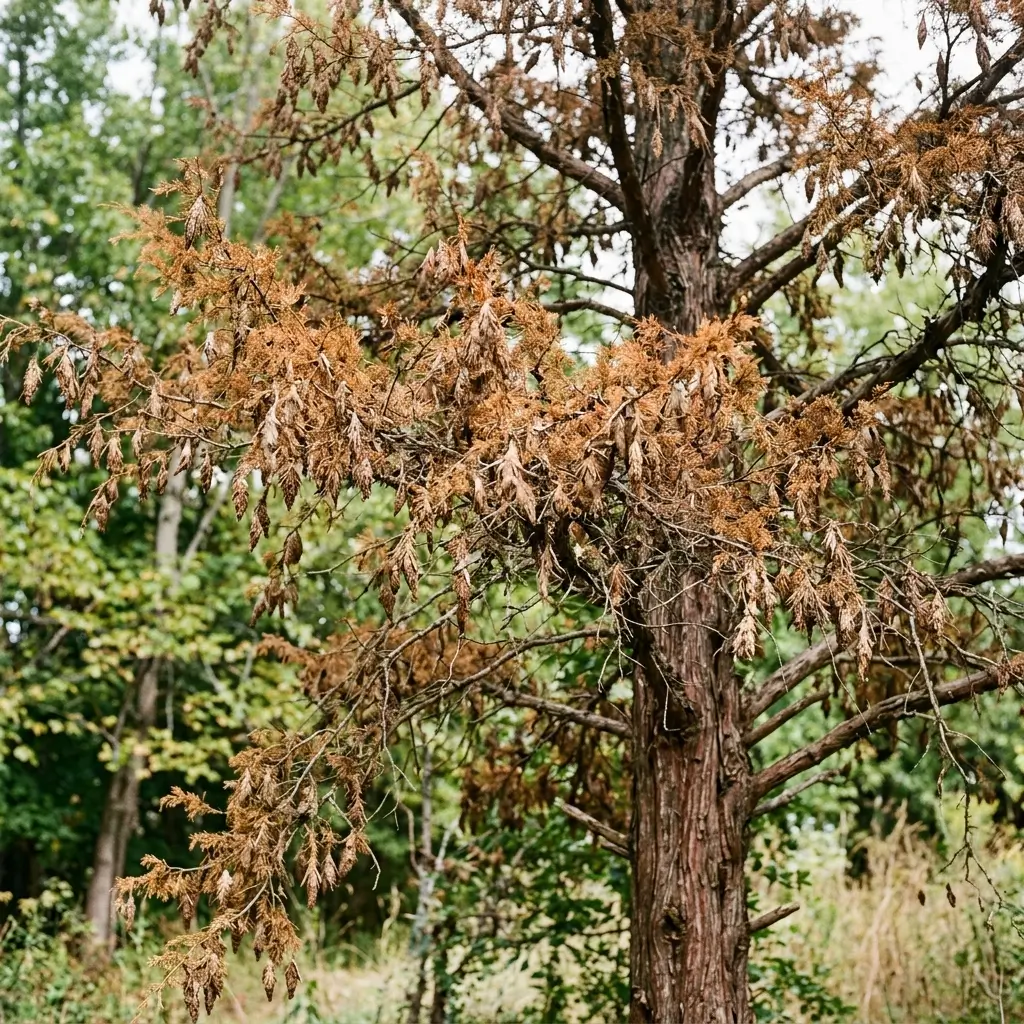
Spindle-shaped cases covered in dead needles, twigs, or leaf fragments hanging from branches
Expert Bagworm Treatment by ISA-certified Arborists
All Natural Tree Experts provides targeted bagworm treatment that protects your trees and shrubs from one of the most destructive defoliating pests. Our certified arborists identify bagworm infestations early and apply treatments at the right time to stop bagworms before they cause permanent damage.
Why Are Bagworms So Hard to Spot Before Their Damage Becomes Visible?
Bagworms are among the most damaging tree pests, yet they often go undetected for an entire season before the damage becomes visible. These caterpillars construct silk-and-debris cases that camouflage them perfectly against tree foliage, making early identification difficult without a trained eye and a deliberate inspection process.
By the time brown patches or significant defoliation appear on an evergreen, bagworms have typically completed their feeding cycle and moved into their overwintering stage. At All Natural Tree Experts, our tree care specialists monitor local hatch timelines to inspect properties during the right window and apply treatment accordingly.
Is your property due for a bagworm inspection before this season’s hatch? Contact us to schedule a bagworm assessment this season.
How a Bagworm Infestation Progresses and Why Each Stage Makes the Next One Worse?
Bagworms feed on the foliage of over 120 host plant species, though they show a strong preference for arborvitae, juniper, spruce, pine, and cedar. Heavy infestations strip needles and leaves at a rate that overwhelms a tree’s ability to recover, particularly on evergreens that cannot regenerate lost foliage.
Here is what a bagworm infestation does at each stage:
01
Young larvae disperse via wind and silk threads, spreading to nearby trees within days of hatching
02
Larvae begin feeding immediately after hatching, targeting new growth on the outer canopy first
03
Each larva builds and enlarges its protective case continuously throughout the feeding season
04
Mature larvae can consume several times their body weight in foliage during a single season
05
Repeated defoliation of evergreens causes branch dieback that does not reverse even after treatment
06
Female bagworms never leave their cases, laying between 500 and 1,000 eggs before dying in late fall
Have you spotted hanging cases on your arborvitae or juniper this season? Contact our arborists to determine the extent of the infestation.
The Narrow Window That Determines How Effective Bagworm Infestation Treatment Will Be
Bagworm treatments are most effective during the larval feeding stage, typically from late May through mid-July in most of the northeast. Applications made outside this window, whether too early before eggs hatch or too late after larvae have matured and sealed their cases, produce little to no result regardless of what product is used.
Our tree care experts track local hatch timelines every season and schedule treatments based on larval activity. Our certified arborists confirm the active presence of bagworms, which means every treatment we perform hits the right developmental stage. Property owners who work with us do not have to guess whether they caught bagworms in time, as we handle that entire process for them.
Contact us to schedule every treatment around confirmed larval activity.


Five Signs Your Trees And Shrubs Are Carrying a Bagworm Infestation
Early detection of bagworms on your property starts with knowing where to look and what the cases look like at different stages of the season. Signs that bagworms are present or have been active on your trees are:
Noticed any of these signs on your trees? Reach out to our team, and we will identify how far the infestation has spread.

The Trees Most Likely to Suffer Serious Damage From a Bagworm Infestation
Bagworms attack both evergreen and deciduous trees, but evergreens suffer the most severe and lasting consequences because they cannot produce a second flush of growth to replace consumed needles.
The following species are most commonly and most seriously affected:
01
Arborvitae
02
Eastern red cedar
03
Juniper
04
Blue spruce
05
White pine
05
Norway spruce
06
Leyland cypress
07
Linden
If your property has any of these species, proactive monitoring is worth scheduling every season.
Call us to set up a seasonal monitoring plan to catch infestations before they reach damaging levels.
How Our Certified Arborists Treat Bagworm Infestations
Have bagworms appeared on your property before, or are you seeing signs of them now? Our team will evaluate the infestation stage and recommend the most effective treatment approach for your specific situation.
The Long-Term Cost of Ignoring a Bagworm Infestation on Your Property
Here is what untreated infestations typically lead to:

Contact our ISA-certified arborists to get ahead of this season’s hatch.
All Natural Tree Experts
Why Property Owners Trust All Natural Tree Experts for Arborist Bagworm Treatment

When it comes to a pest that gives you a narrow window to act, who handles the job matters as much as what gets applied. Here is what sets our team apart:
- ISA-certified arborists on every job
- Seasonal hatch timeline monitoring
- Treatment applied at the confirmed larval stage
- Eco-friendly treatment options
- Licensed, insured applicators
- Affordable bagworm treatment with transparent pricing
ALL NATURAL TREE EXPERTS WILL ASSESS YOUR TREES, CONFIRM THE INFESTATION STAGE, AND RECOMMEND THE MOST EFFECTIVE TREATMENT FOR YOUR SITUATION.

Frequently Asked Questions (FAQs)
01. When is the best time to treat bagworms?
Late May through mid-July is the window that actually works, once larvae have hatched and are actively feeding. After that, cases thicken, and insecticides cannot get through. Miss the window, and your best move is removing cases by hand in the fall and planning a properly timed treatment for the following spring.
02. Can bagworms kill a tree?
Yes, and evergreens take the hardest hit. Arborvitae and juniper cannot regrow consumed needles, so defoliated branches die and stay dead. One severe infestation on an already stressed tree can mean full tree loss. Deciduous trees recover more reliably but come out weakened and more vulnerable to whatever hits them next.
03. How do I prevent bagworms from coming back next year?
Remove and destroy overwintering cases by hand every fall. Each one holds up to 1,000 eggs, so even a partial effort makes a real dent in next season’s population. Combine that with annual monitoring and a properly timed preventative treatment each spring, and you have a reliable system for keeping them under control.