Support Weak or Damaged Trees with Professional Cabling and Bracing in Salem
Is your tree developing weak branches, a split trunk, or a heavy limb that appears unstable? We provide professional tree cabling and bracing services in Salem to support vulnerable trees and reduce stress on structurally weak areas during storms and high winds.
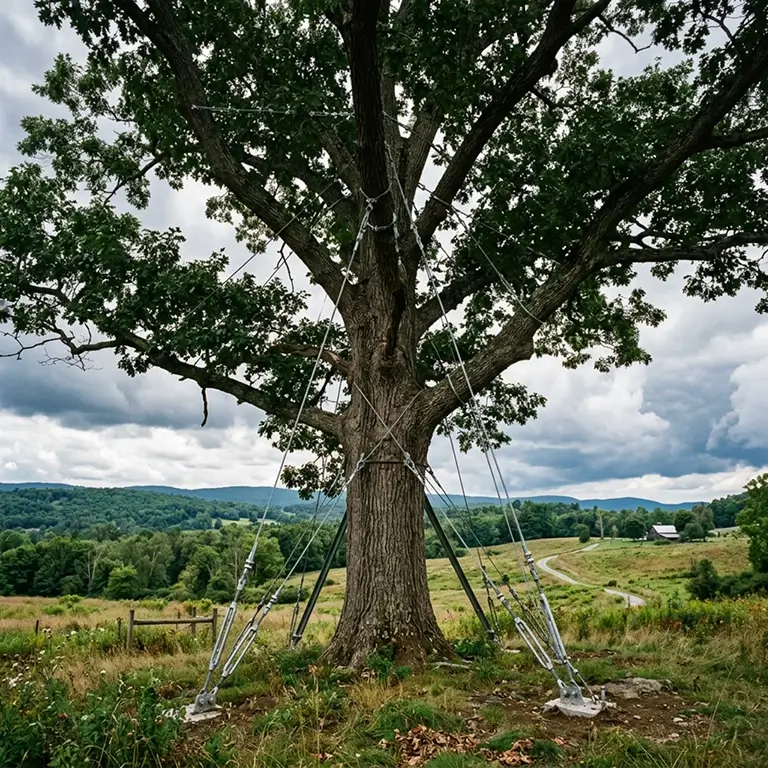
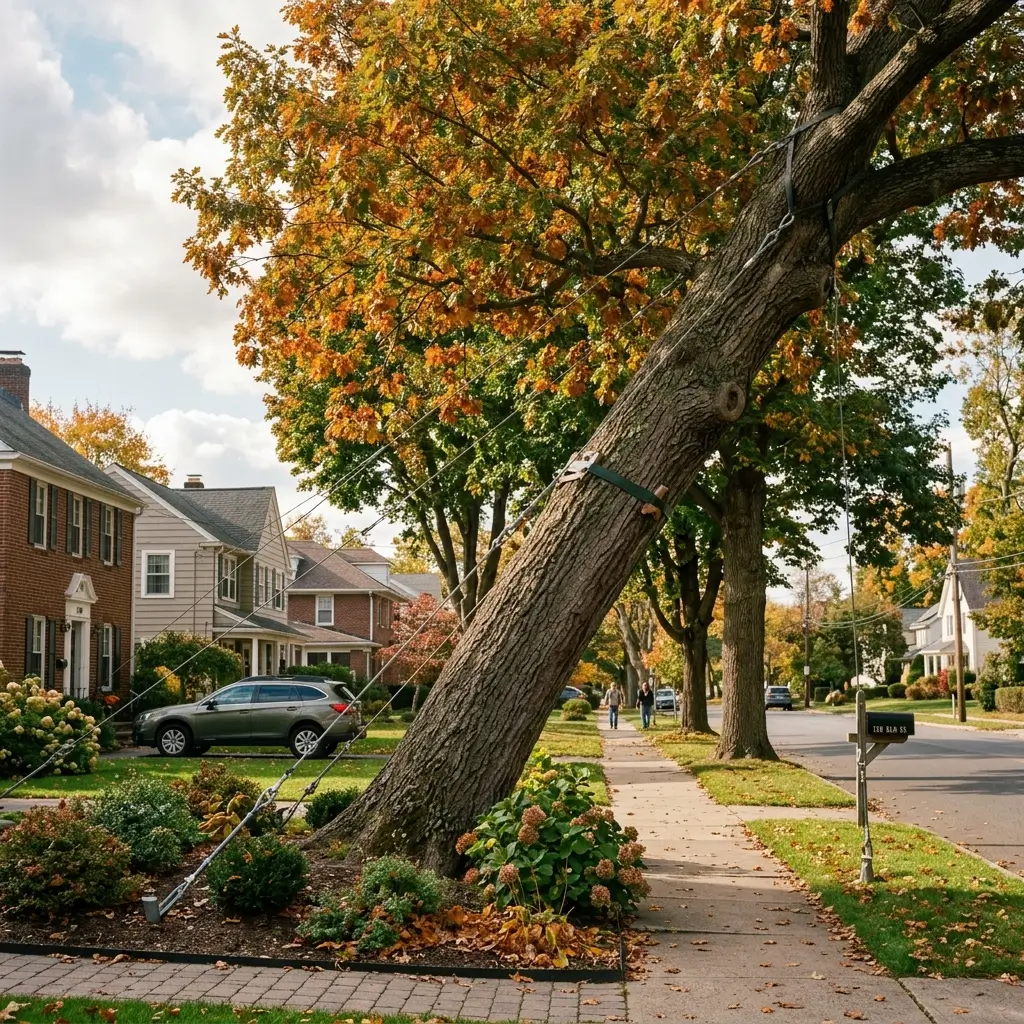
Tree cabling uses a support system installed high in the canopy to limit excessive movement between weak limbs. Tree bracing uses threaded steel rods to reinforce cracked trunks or weak branch unions.
Before recommending a solution, our ISA-certified arborists inspect the tree’s structure, identify visible defects, and evaluate the condition of the affected limbs and connections. We then design a support system based on your tree’s specific needs
Call Us for Tree Cabling and Bracing
(540) 230-1098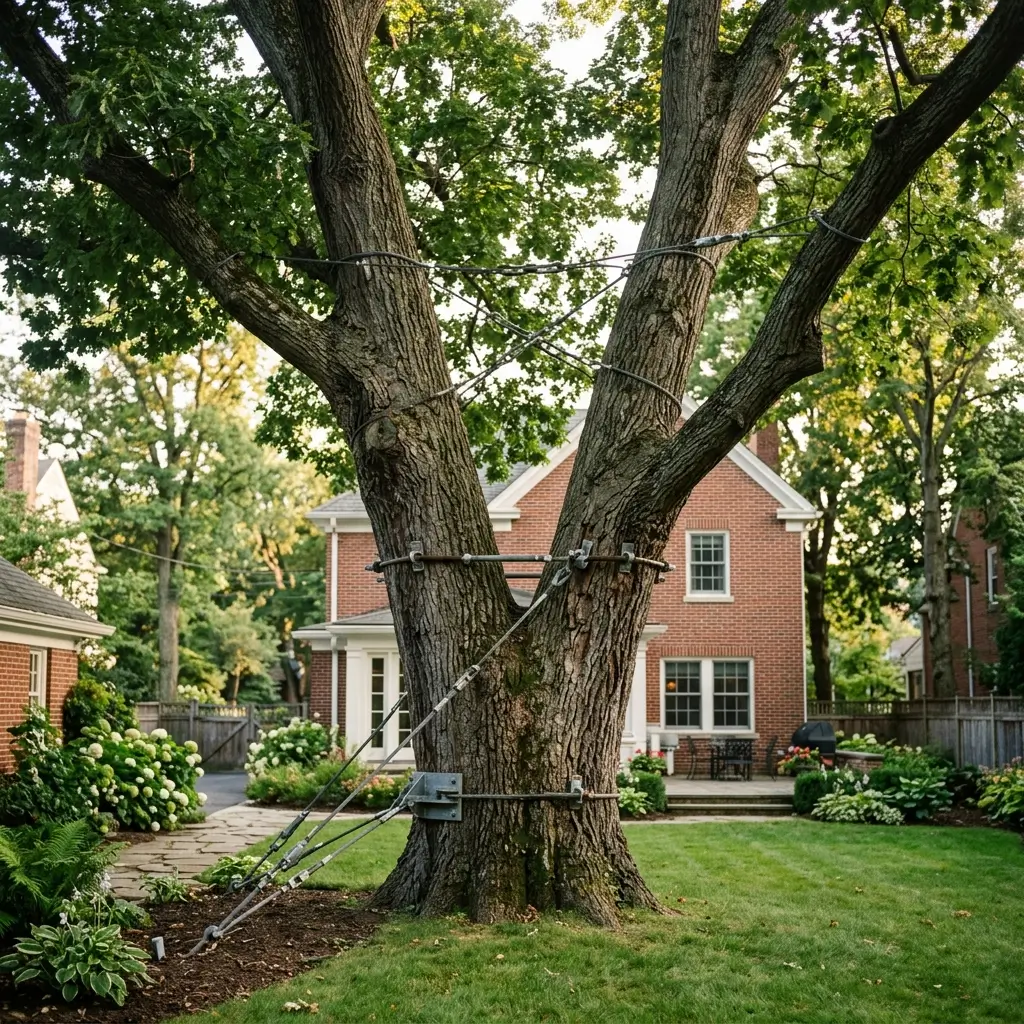
Is Your Tree Leaning or Cracking? Our Arborists Can Help
Have you noticed a crack where two large limbs meet or a tree leaning more than it did last year? These changes may indicate a structural weakness that can worsen during strong winds, heavy rain, or snow.
All Natural Tree Experts provides professional tree cabling and bracing in Salem to help reduce stress on weak branch unions and limit excessive movement in vulnerable limbs. Depending on the tree’s condition, we may recommend cabling, bracing, structural pruning, monitoring, or another solution.
Contact our team to schedule an on-site assessment and learn which option is most appropriate for your tree.
When Does a Tree Need Cabling or Bracing?
Split or Cracked Trunk
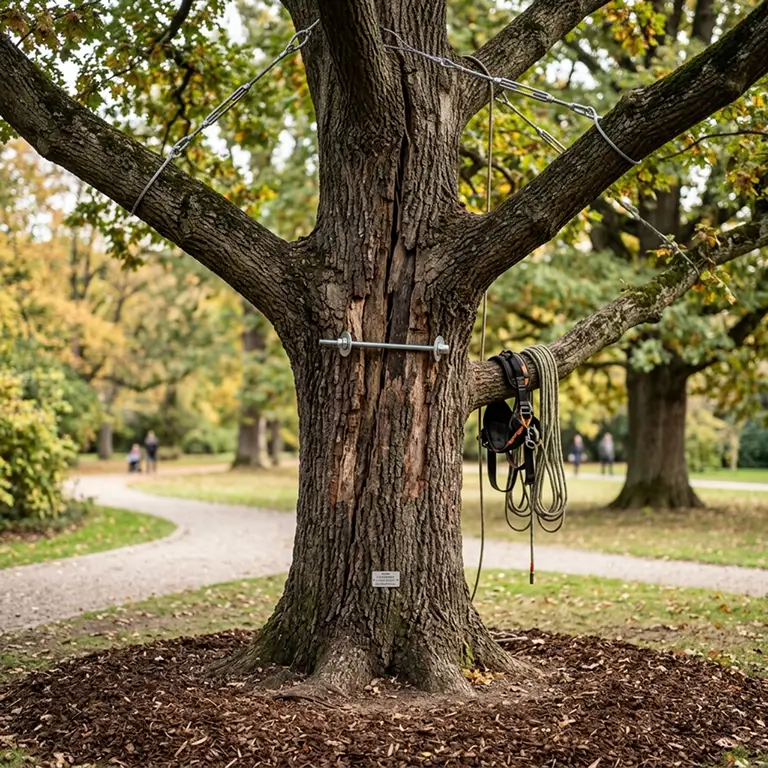
Codominant Stems
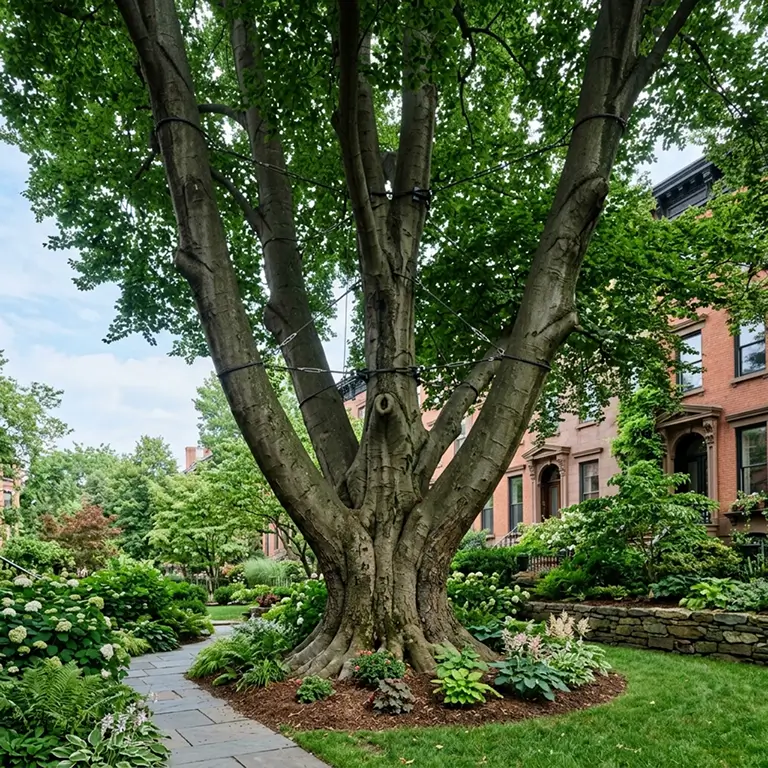
Heavy or Overextended Limbs
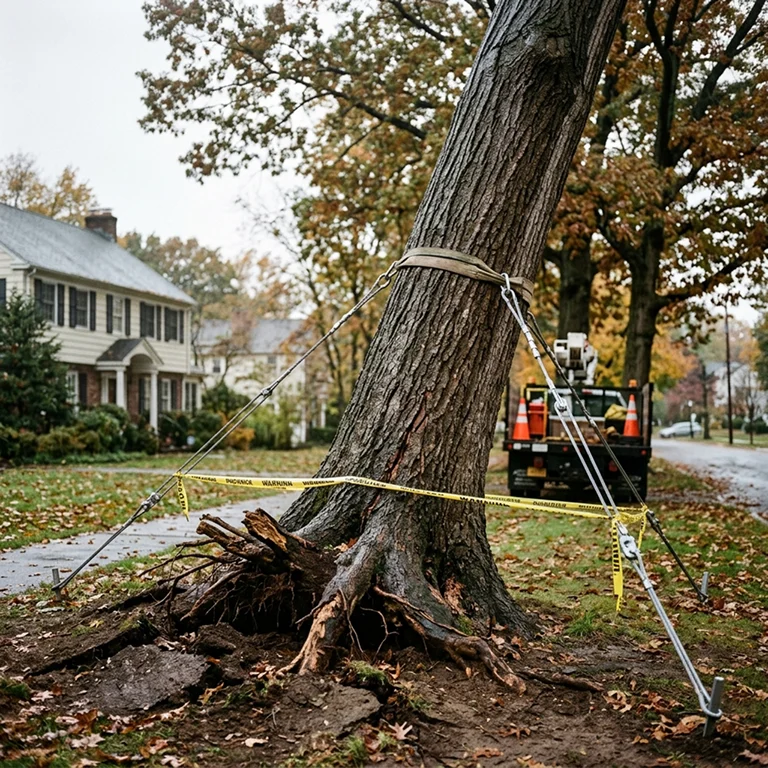
Storm or Wind Damage
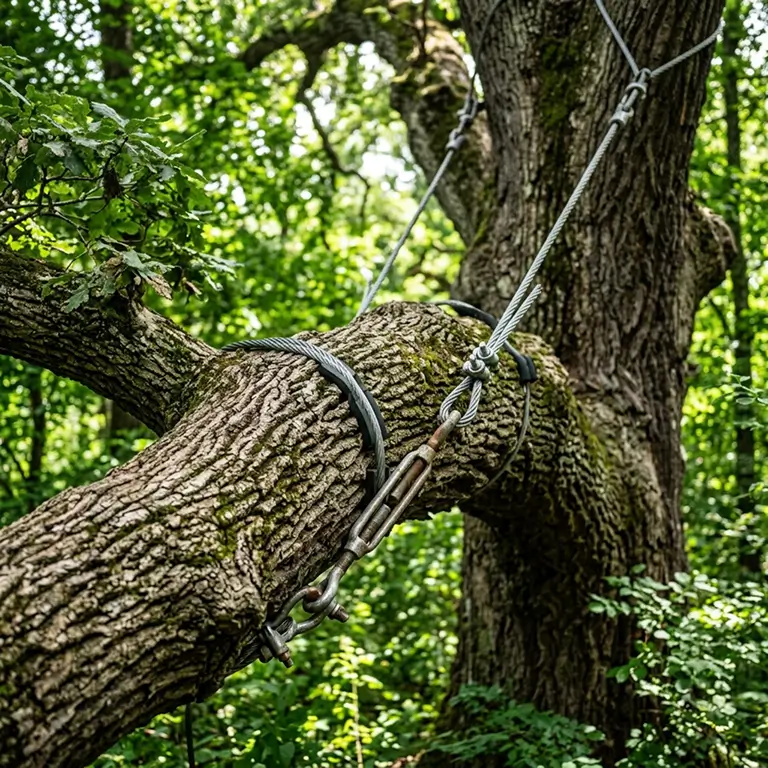
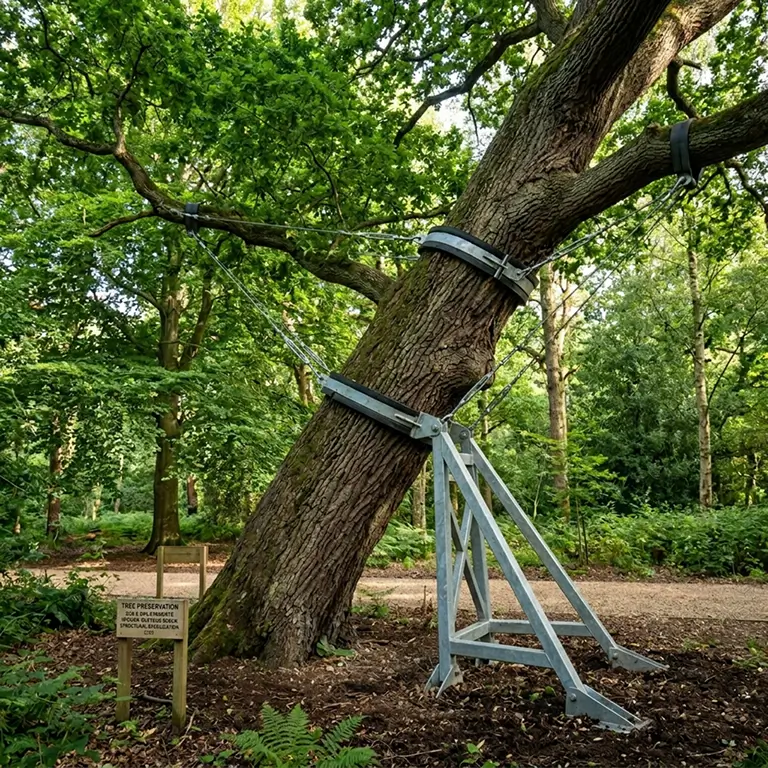
Leaning Trees
Is your tree facing any of these issues? Contact us to save your tree.
7 Signs Your Tree Can Benefit from Cabling and Bracing
Trees rarely fail without warning. Most give off signs weeks or months ahead of time, if you know where to look. Watch your trees for these seven warning signs:
- A crack where two large limbs or trunks meet
- Two branches growing from the same spot with bark trapped between them instead of a strong connection
- Your tree has started leaning, even though it stood straight before
- A large limb stretches well beyond the rest of the canopy and feels too heavy for the tree to support
- Soft or decayed wood around a major branch attachment
- The ground around the base begins lifting or cracking after strong winds
- You notice the tree swaying more than usual during windy weather
Do any of these signs ring a bell? Then, there’s no time to waste on “"tree bracing near me" searches. Contact us for an on-site evaluation and save your tree.
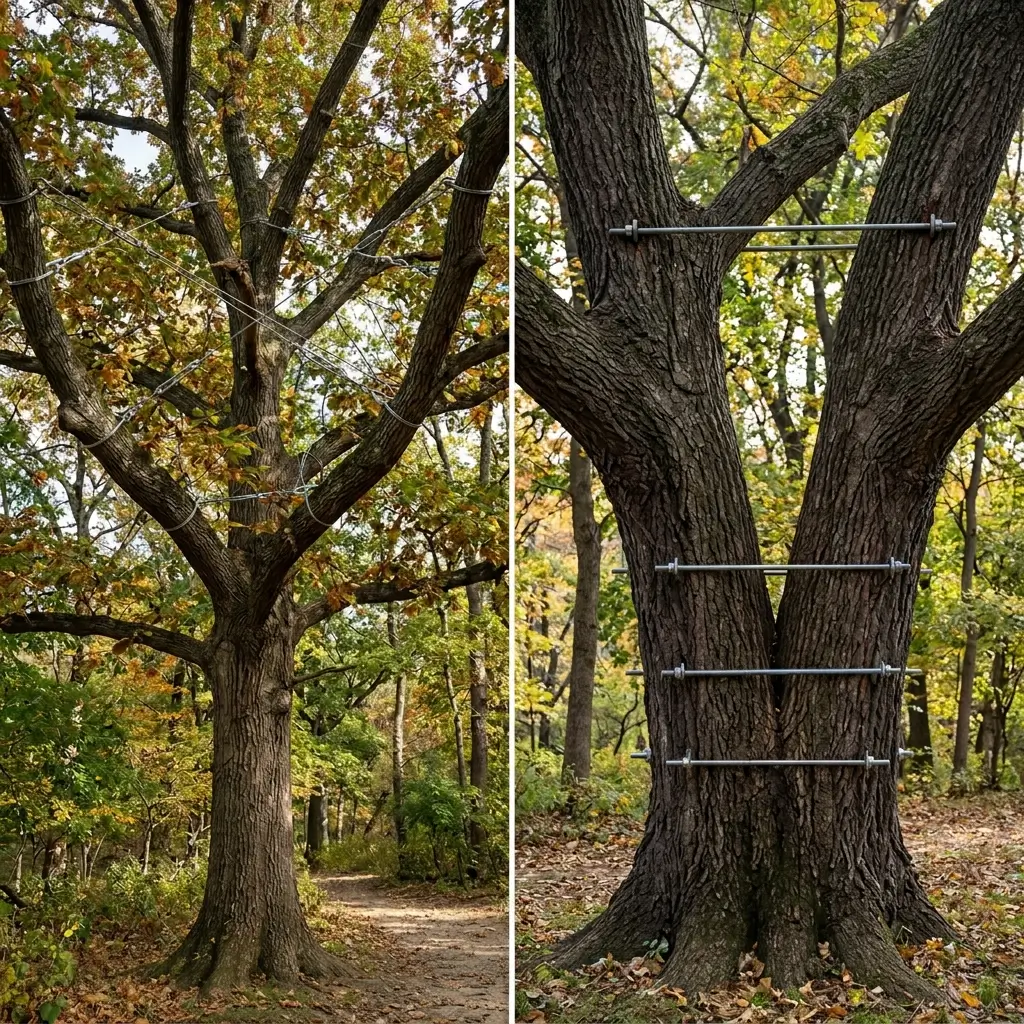
Static vs. Dynamic Cabling: What's the Difference?
Not every structural weakness requires the same type of support. Static and dynamic cabling systems are designed to manage different tree conditions, and the right option depends on the type and severity of the defect, the tree species, its growth pattern, and the results of a professional arborist assessment.
Static cabling typically uses steel components to provide firm support and limit movement between structurally weak limbs or stems. It may be recommended for trees with significant structural concerns, such as weak co-dominant stems or developing cracks. Dynamic cabling uses flexible synthetic support systems that allow more natural movement while helping limit excessive motion and reduce stress on vulnerable branch unions.
| Factor | Static Cabling | Dynamic Cabling |
|---|---|---|
| Support type | Firm, less flexible support | Flexible support that allows more natural movement |
| Common materials | Steel cable and other rated hardware | Specialized synthetic support materials |
| Movement allowed | Limits movement more significantly | Allows controlled movement |
| Can be considered for | More significant structural concerns or weak unions requiring stronger support | Trees with structural concerns that may benefit from flexible support |
| Installation method | Varies based on the tree, support design, and hardware used | Varies based on the support system and tree structure |
| Maintenance | Requires periodic inspection for hardware condition, tree growth, and system performance | Requires periodic inspection for wear, tree growth, and system condition |
The right support system depends on the tree’s structure and overall condition. Our ISA-certified arborists assess the defect, growth pattern, canopy movement, and long-term support needs before recommending a cabling solution.
How Cabling and Bracing Help Support Weak Trees
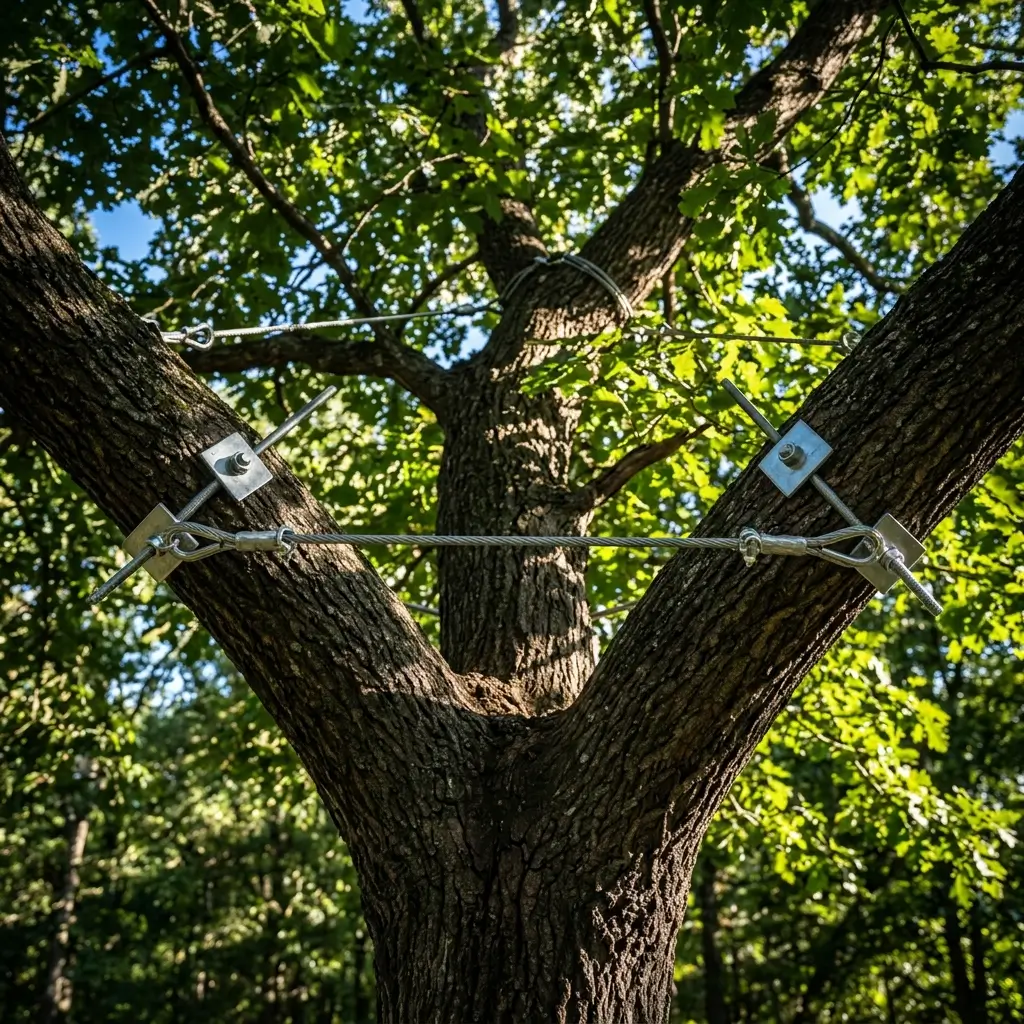
A weak branch union forms when two limbs or trunks grow so close together that bark becomes trapped between them instead of forming solid wood. This trapped bark, known as included bark, creates a weaker connection that is more likely to split under the weight of heavy limbs, strong winds, or wet snow. A tree limb brace, usually a threaded steel rod installed through both stems, helps hold that weak connection together and reduces the risk of it splitting apart.
Cabling works in a different way. Instead of closing a crack, a steel cable is installed higher in the canopy to limit how far weak limbs can move during strong winds, reducing the stress on the branch union below. When a trunk is split or starting to lean, a tree trunk brace helps keep both sides stable while allowing the tree to continue growing.
Contact us and our tree specialists will help you find out which support system is right for your tree.
How Much Does Tree Cabling and Bracing Cost in Salem?
The cost of tree cabling and bracing depends on the tree itself. A small tree with one weak branch may only need a single support cable, while a large mature tree with multiple structural defects can require several cables, threaded rods, and more time to install everything safely. Several factors affect the final cost, including:


Every support system is designed around the tree’s condition rather than a standard price, so we inspect the tree first and provide a clear estimate before any work begins.
We Serve All of Salem
Salem’s tree canopy includes plenty of white oaks, red maples, and Virginia pines, and each species tends to develop its own kind of structural weakness. Oaks often grow multiple co-dominant leaders that develop included bark over time, maples are prone to splitting at low branch unions after heavy snow, and pines can lean hard after root disturbance from nearby construction.
We provide tree cabling and bracing services throughout Salem, Virginia, from Downtown Salem and the Roanoke College area to homes along East Main Street and West Main Street.
We also work in neighborhoods around Apperson Drive, South Salem, and Hidden Valley, so no matter where your property is located, you can count on a prompt response and professional tree care.
Why Salem Trusts All Natural Tree Experts
Installing a cable or brace is only part of the job. Choosing the wrong support system or placing it in the wrong location can put more stress on the tree instead of protecting it. Our ISA-certified arborists evaluate how the tree is growing, where the structural weakness begins, and how much support it actually needs before any hardware is installed. See what sets us apart:
- Certified arborists assess each union before recommending a system
- We use galvanized steel and rated synthetic rope built for outdoor load
- Every installation follows ANSI A300 pruning and support standards
- We check cable tension and hardware wear on follow-up visits
- Our crews carry insurance for aerial and drilling work
Reach out to our team, and let’s take a closer look at what your tree actually needs.
Who we work with






Frequently Asked Questions (FAQs)
01. What is tree cabling?
Tree cabling is a support system that uses steel or synthetic cable to connect two or more limbs high in the canopy. It limits how far weak limbs can move during wind or storms. This lowers the chance of a limb breaking off or a split spreading further.
02. What is tree bracing?
Tree bracing uses threaded steel rods drilled through a trunk or limb to hold a crack or weak union together. It works best on trees with visible splits or included bark. Bracing gives direct, physical support at the point of weakness.
03. How do I know if my tree needs cabling or bracing?
Look for cracks where large limbs meet, a trunk with two equal leaders, or a tree that leans more than it used to. Bark that looks pinched at a branch union is another warning sign. An arborist can confirm the exact issue with an on-site inspection.
04. How long does a cable or brace system last?
Most systems last many years, but the exact lifespan depends on the material and how much the tree grows. Steel systems need periodic tension checks, and synthetic rope needs periodic wear checks. Regular follow-up visits catch wear before it becomes a problem.
Get A Free Consultation
Call or Fill Out The Form Below To Schedule An Arborist Assessment!
What Customers Say About Our Tree Specialists